
Reclaim Attention.
Rebuild Connection.
Recover Agency.
Peer support, family participation, and practical tools for healthier screen habits.
Our 3-Pillar Model
Family Participation
Parallel Parent Support Groups
These should be a centerpiece.Peer Support
Focus Clubs, Study Buddies and Mentorship
Data Reflection
Awareness Tools and Measurable Progress



Focus Group Experience
These should be a centerpiece.Weekly Focus Groups
Small peer-based meetings to practice attention habits.
Study Buddy Accountability
SShared focus sessions and check-ins.
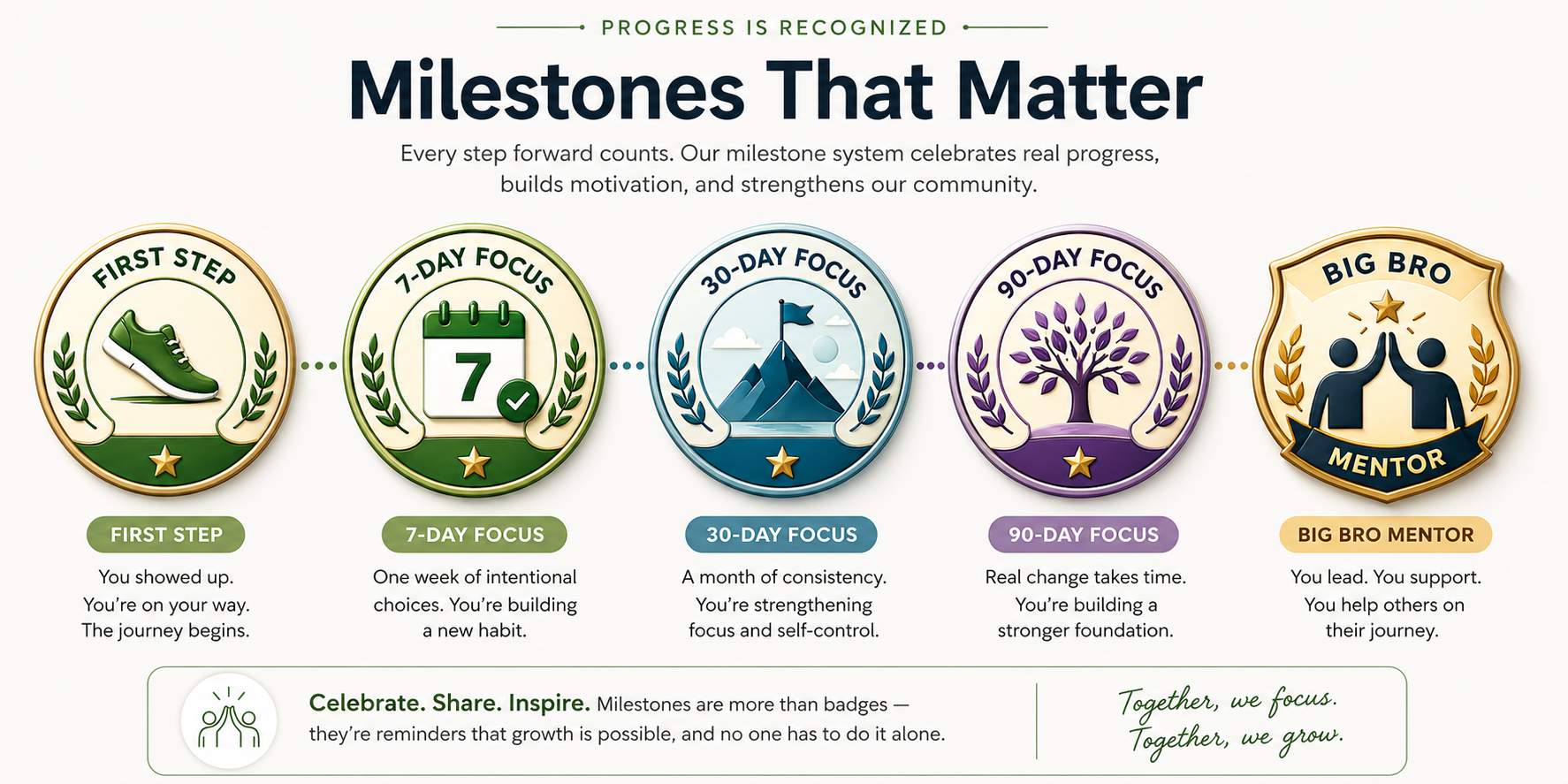
Big Bro Mentorship
Older participants support newer members.

Parent Circles
Support for:
Family digital boundaries
Parent-child communication
Parents examining their own habits
-
You do not need to identify as “addicted” to participate.
Screen Associate is not limited to severe cases of compulsive screen use. It is designed for anyone who wants a healthier, more intentional relationship with technology — whether you are struggling with distraction, noticing screens affect your sleep or focus, or simply curious about improving attention.
Many participants join not because they feel out of control, but because they want support in building stronger habits.
-
Yes.
Parents may participate in Parent Support Circles even if their child is not enrolled in the student track.
In fact, many families find change begins when parents first examine their own digital habits and communication patterns. The parent track is designed not only to support children, but to help adults build healthier family environments around technology.
Families can join together or start separately.
-
Most screen-time tools measure behavior.
We focus on changing behavior.
Apps may show how much time you spend on a device, but they often do not address the deeper challenges behind overuse — habits, impulses, stress, loneliness, peer norms, or the lack of alternatives.
Screenholics Anonymous combines awareness with peer support, accountability, family participation, and real-world replacement experiences. We view data as one tool, not the intervention itself.
Technology alone rarely solves a problem created partly by technology.
-
Yes — the initiative is informed by research across behavioral psychology, habit formation, peer accountability, addiction recovery models, and youth digital wellbeing.
Our model draws from established principles including:
Social support and peer accountability
Positive reinforcement and milestone recognition
Family systems approaches
Behavior tracking and reflective feedback loops
The program is also being developed as a research-informed pilot, with ongoing learning and iteration built into its design.
-
Schools can partner in several ways, depending on their needs and readiness.
Possible partnership models include:
Hosting a pilot Focus Club on campus
Integrating the model into student wellness programming
Collaborating on parent workshops
Supporting research or evaluation partnerships
Exploring school-based adaptation of the model
We welcome conversations with schools, counselors, and youth-serving organizations interested in piloting or co-developing implementation.
Contact us to discuss a partnership.
-
Yes. Respect, privacy, and psychological safety are foundational to the program. Participants are expected to honor community norms around confidentiality and non-judgment.
-
No. This is not a digital abstinence program.
The goal is not to eliminate technology, but to build more intentional, healthy use.
-
Pilot participation is currently free (or offered at minimal cost, depending on how you structure it). Our goal is to make support accessible.