📱 Screen Time & Physical Health: What the Science Really Says
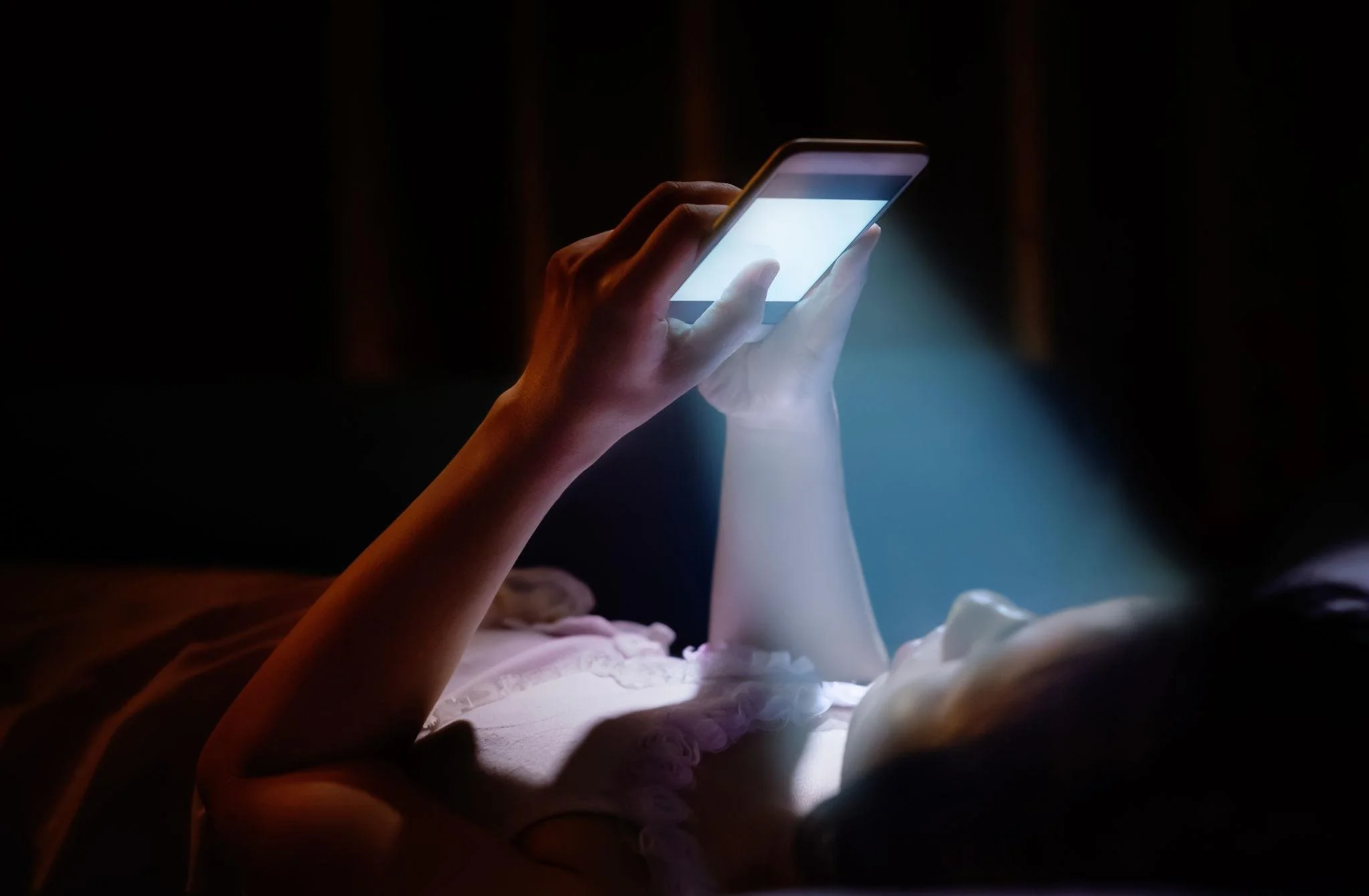
In recent years, screen time has become one of the most debated topics in youth development. Parents worry about sleep. Educators notice declining focus. Physicians observe rising sedentary behaviors. But what does the research actually say about the physical, physiological, and biological impact of screen use on children and adolescents?
This article synthesizes current peer-reviewed research to clarify what we know—and what we still don’t.
1. Sleep Disruption: The Strongest and Most Consistent Finding
If there is one area where research shows consistent evidence, it is sleep.
🔹 Blue Light & Melatonin Suppression
Short-wavelength blue light emitted from LED screens suppresses melatonin secretion—the hormone that regulates circadian rhythm. A controlled laboratory study found that evening exposure to light-emitting eReaders significantly delayed circadian timing and reduced next-morning alertness compared to reading printed books (Chang et al., 2015).
Similarly, a review in Pediatrics concluded that screen exposure before bedtime is associated with:
Delayed sleep onset
Reduced total sleep time
Increased daytime sleepiness
(Carter et al., 2016)
Adolescents are particularly vulnerable because their circadian rhythms naturally shift later during puberty. Screen use compounds this biological delay.
2. Sedentary Behavior & Metabolic Risk
🔹 Obesity & Physical Inactivity
Multiple large-scale longitudinal studies link higher screen time to increased risk of overweight and obesity in youth.
A systematic review and meta-analysis in JAMA Pediatrics found that greater screen time was associated with higher body mass index (BMI) and increased adiposity among children and adolescents (Fang et al., 2019).
The mechanisms are multifactorial:
Displacement of physical activity
Increased snacking during screen use
Exposure to food advertising
Reduced sleep (which affects appetite regulation hormones like leptin and ghrelin)
Importantly, not all screen time is equal—passive TV viewing appears more strongly linked to obesity risk than interactive or educational screen use.
3. Vision: Digital Eye Strain & Myopia
🔹 Digital Eye Strain
Extended near-work from screens can cause:
Eye fatigue
Blurred vision
Headaches
Dry eyes
The American Optometric Association describes this as “Computer Vision Syndrome,” though high-quality pediatric longitudinal data are still emerging.
🔹 Myopia (Nearsightedness)
More robust evidence exists linking near-work and reduced outdoor time to increased myopia risk.
A landmark meta-analysis found that greater time outdoors significantly reduces the onset of myopia in children (Xiong et al., 2017). While screen time itself is not the sole cause, high digital engagement often replaces outdoor exposure, indirectly increasing risk.
Outdoor light intensity appears protective by stimulating dopamine release in the retina, which slows excessive eye elongation.
4. Musculoskeletal Concerns: “Tech Neck” & Posture
Children increasingly report neck and upper back pain associated with prolonged device use.
A cross-sectional study in Applied Ergonomics found significant associations between mobile device use duration and musculoskeletal discomfort among adolescents (Straker et al., 2018).
Forward head posture (“tech neck”) increases mechanical load on the cervical spine. While long-term skeletal consequences are still being studied, early data suggest increased risk of chronic neck pain patterns if habits persist into adulthood.
5. Neurobiological Findings: Still Emerging
Brain imaging studies have attracted media attention, but interpretation requires caution.
The large-scale NIH Adolescent Brain Cognitive Development (ABCD) Study reported associations between high screen use and structural differences in certain cortical regions (Paulus et al., 2019). However:
Findings are correlational, not causal
Effect sizes are small
Developmental variability is significant
Current consensus: We do not yet have conclusive evidence that typical recreational screen use causes structural brain damage, but excessive, unregulated use may interact with developmental vulnerability.
6. Dose Matters: Is There a Threshold?
One major debate is whether harm increases linearly with screen time.
A widely cited study in Psychological Science found that moderate screen use showed minimal association with well-being, while extremely high use (multiple hours beyond population norms) showed stronger negative correlations (Przybylski & Weinstein, 2017).
This suggests a non-linear relationship:
Low to moderate use → minimal measurable physical impact
Excessive, late-night, sedentary use → compounding biological effects
7. What Research Does Not Support
It is important to clarify misconceptions:
There is no strong evidence that normal screen use “destroys the brain.”
Not all digital activities carry equal physical risk.
Context (timing, content, posture, co-activity) matters more than raw hours alone.
The American Academy of Pediatrics has shifted from strict hourly limits toward emphasizing:
Sleep protection
Physical activity
Screen-free meals
Family media plans
(American Academy of Pediatrics, 2016)
Practical, Research-Aligned Recommendations
Based on current evidence:
✔ Protect Sleep
No screens 60–90 minutes before bed
Charge devices outside the bedroom
Use night shift / blue light filters (helpful but not sufficient alone)
✔ Preserve Movement
At least 60 minutes of moderate-vigorous physical activity daily (WHO, 2020)
Encourage outdoor exposure for eye health
✔ Protect Posture & Vision
20-20-20 rule (every 20 minutes, look 20 feet away for 20 seconds)
Neutral neck positioning
Limit extended uninterrupted sessions
✔ Focus on Patterns, Not Panic
The cumulative pattern of sleep deprivation + sedentary behavior + chronic posture strain is where health risk increases—not occasional recreational use.
Conclusion
The strongest and most consistent physical health concerns linked to youth screen use are:
Sleep disruption
Sedentary behavior and metabolic risk
Eye strain and reduced outdoor exposure
Musculoskeletal discomfort
The evidence does not support catastrophic claims—but it does support thoughtful boundaries.
The question is no longer “Are screens bad?”
The real question is:
How do we design digital environments that protect biological rhythms while preserving the undeniable benefits of modern technology?
That is where responsible intervention—and informed parenting—must focus.
References
American Academy of Pediatrics. (2016). Media and young minds. Pediatrics, 138(5), e20162591.
Carter, B., Rees, P., Hale, L., Bhattacharjee, D., & Paradkar, M. S. (2016). Association between portable screen-based media device access or use and sleep outcomes: A systematic review and meta-analysis. Pediatrics, 138(1), e20151901.
Chang, A. M., Aeschbach, D., Duffy, J. F., & Czeisler, C. A. (2015). Evening use of light-emitting eReaders negatively affects sleep, circadian timing, and next-morning alertness. PNAS, 112(4), 1232–1237.
Fang, K., Mu, M., Liu, K., & He, Y. (2019). Screen time and childhood overweight/obesity: A systematic review and meta-analysis. JAMA Pediatrics, 173(7), 667–676.
Paulus, M. P., Squeglia, L. M., Bagot, K., et al. (2019). Screen media activity and brain structure in youth: Evidence from the ABCD Study. JAMA Pediatrics, 173(9), 861–869.
Przybylski, A. K., & Weinstein, N. (2017). A large-scale test of the Goldilocks hypothesis: Quantifying the relations between digital-screen use and mental well-being. Psychological Science, 28(2), 204–215.
Straker, L., Harris, C., Joosten, J., & Howie, E. (2018). Mobile technology dominates school children’s IT use in an advantaged school community and is associated with musculoskeletal and visual symptoms. Ergonomics, 61(5), 658–669.
World Health Organization. (2020). Guidelines on physical activity and sedentary behaviour. WHO.
